Soil diagnosis in Outaouais | Analysis and correction
Soil diagnosis before any intervention
A soil diagnosis consists of evaluating the structure, compaction, drainage and real biological capacity of your terrain before any landscaping project.
Before a renovation, lawn installation, drainage or interlock, it is essential to know the real state of the terrain.
Hortiplan Outaouais performs structural and biological analyses for projects in Gatineau, Hull, Chelsea, Cantley, Val-des-Monts, Ottawa and surrounding areas. We refuse to intervene blindly.
Heavy clay soils, urban backfills and freeze-thaw cycles in the Outaouais require a precise approach.
Plan my soil diagnosis
avoid unnecessary work
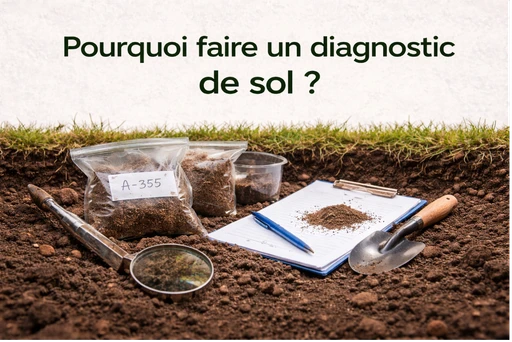
Why do a soil diagnosis?
Soil may seem acceptable on the surface but be deficient in depth. Compaction, water stagnation, superficial rooting or mineral imbalance cause recurring problems.
The diagnosis allows for precise adaptation of interventions, avoiding subsidence, water stagnation and repeated corrections, and optimizing long-term investments.
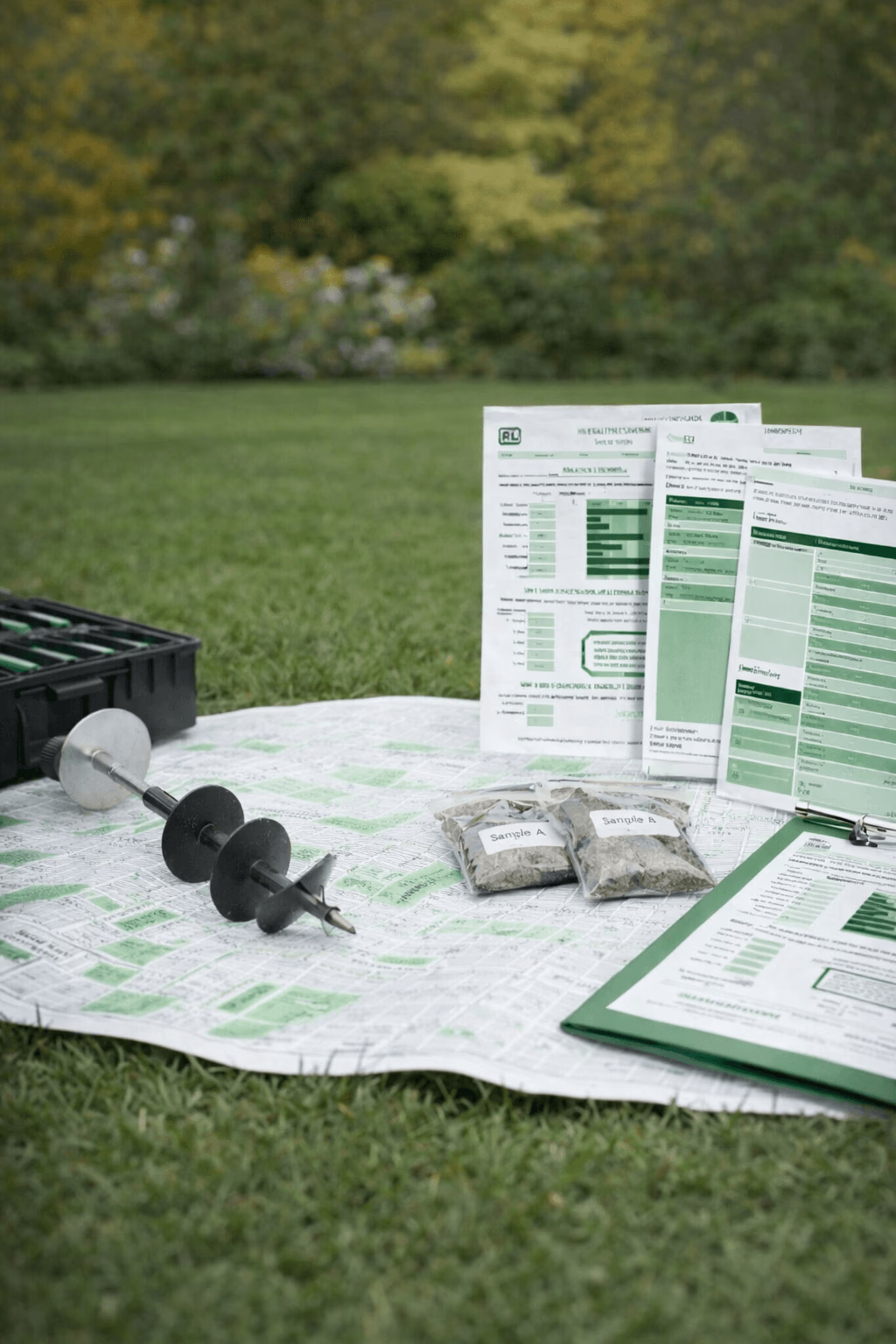
What we analyze on your terrain
- ✓We evaluate soil compaction and density to determine root aeration capacity.
- ✓We analyze water management, runoff areas and infiltration capacity.
- ✓We observe organic matter and soil biological vitality.
- ✓We verify the bearing capacity required for paver projects and base stability.
- ✓Finally, we study the compatibility between soil, exposure and plants.
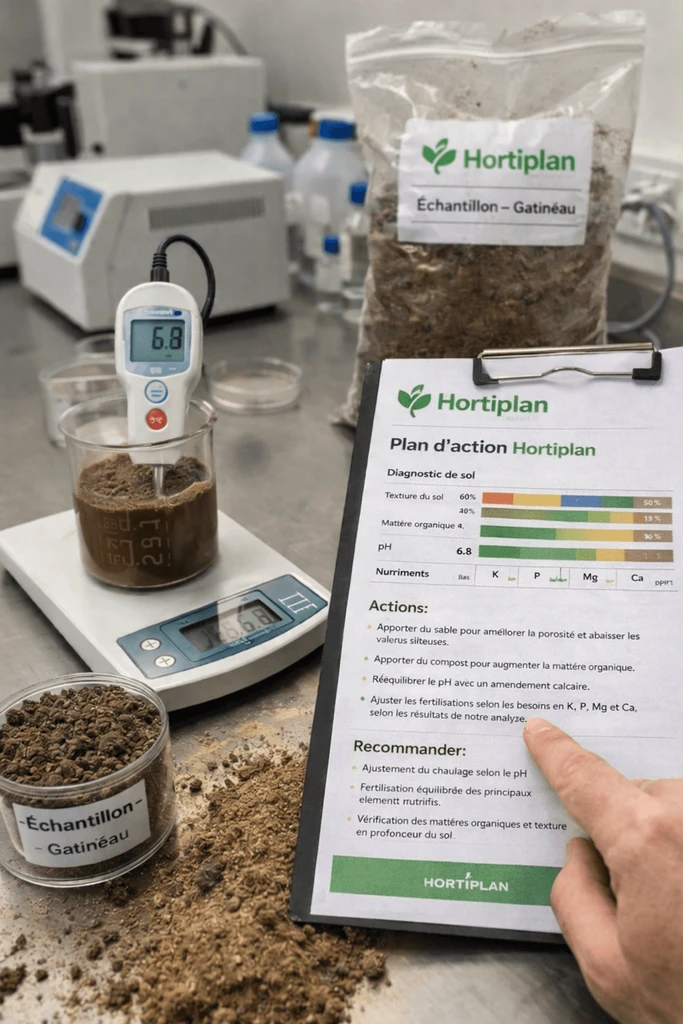
Laboratory soil analysis (optional)
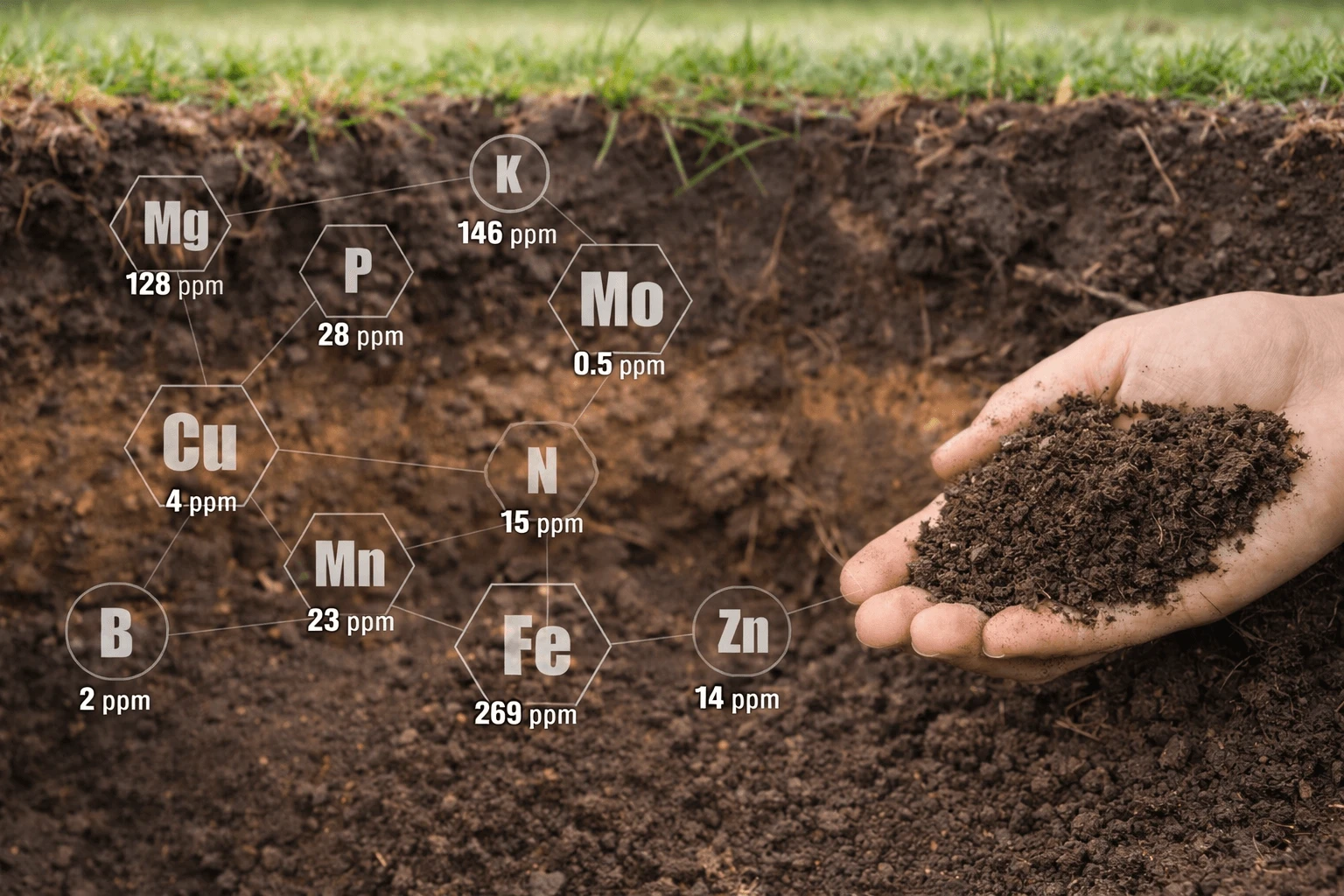
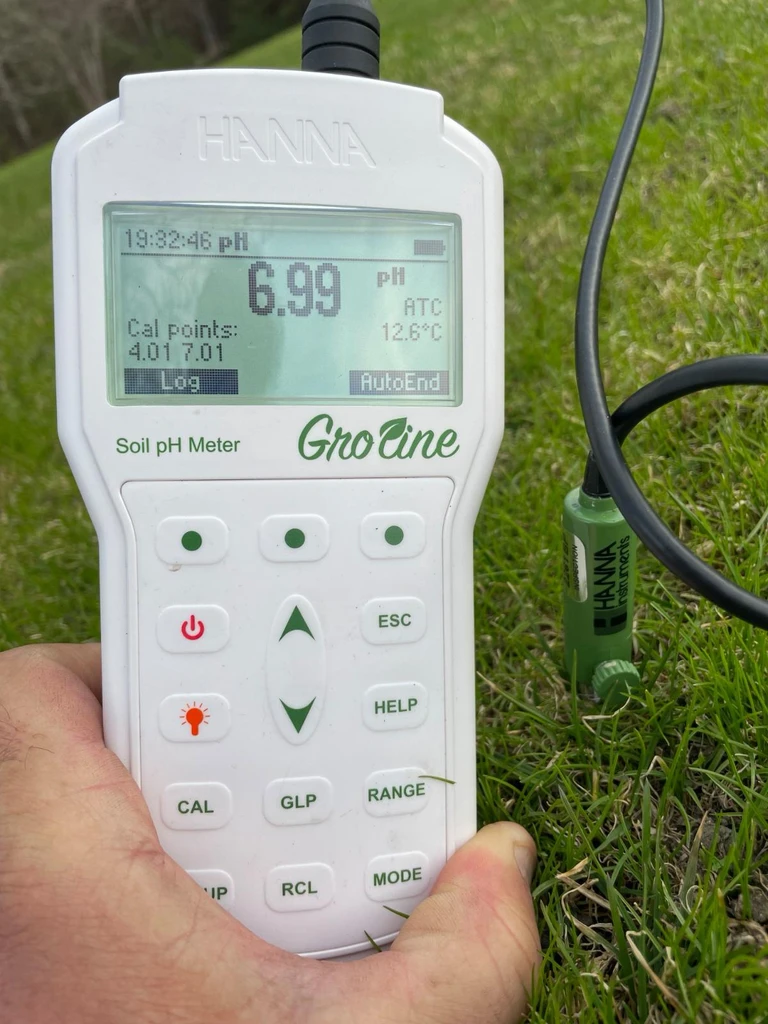
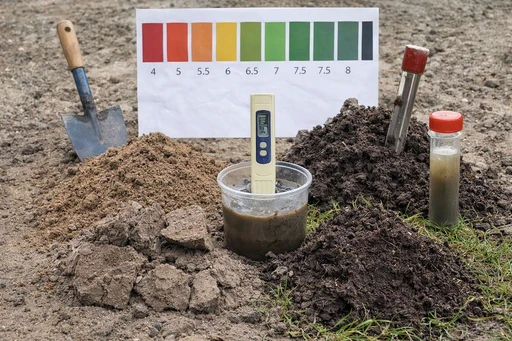
When necessary, a sample is sent to a certified laboratory to analyze pH, organic matter, mineral balance and cation exchange capacity.
The results allow for precise adjustment of recommendations.
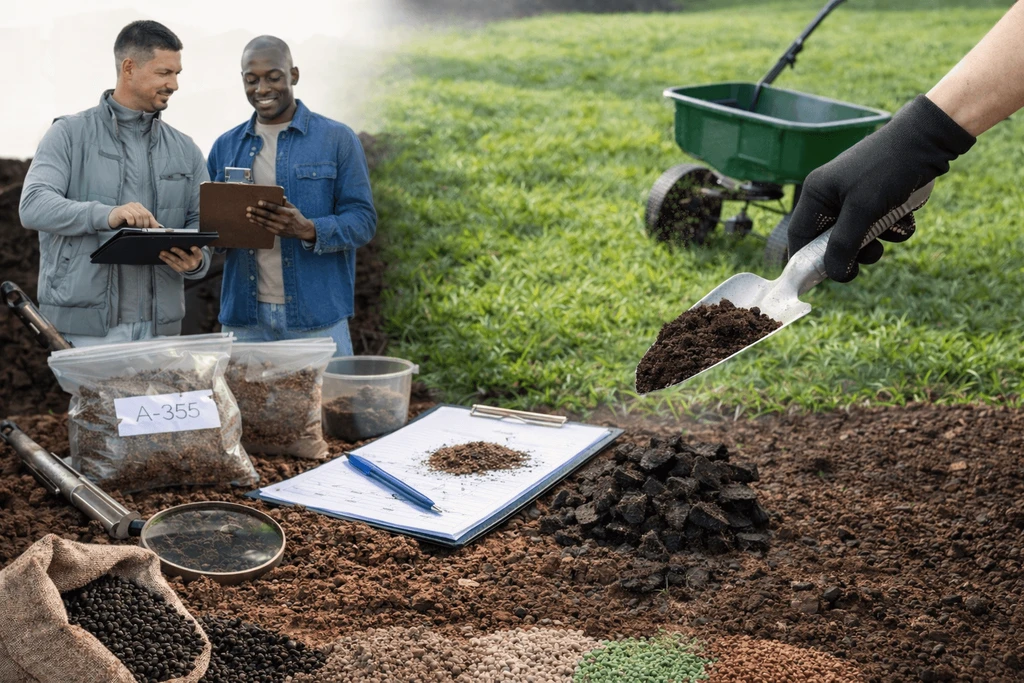
Personalized recommendations
Following the diagnosis, we propose natural amendments adapted to the terrain, including compost, corrective minerals, biochar and targeted structural adjustments.
Each correction is based on real data.
Difference between standard intervention and diagnosis-based intervention
Without a diagnosis, work is based on assumptions and repeated corrections.
With a precise diagnosis, each intervention is structured, measured and adapted to the reality of the terrain.
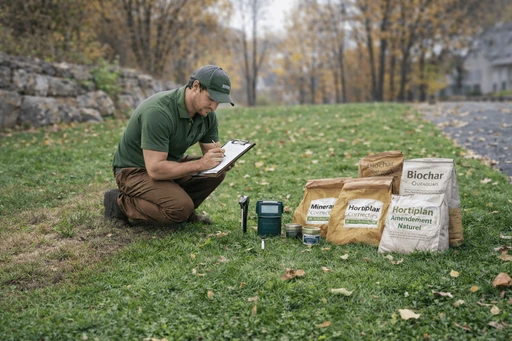
Our field method
The diagnostic visit generally lasts between 45 and 70 minutes depending on terrain complexity.
We perform a physical reading of the soil in several strategic zones to evaluate compaction, infiltration, bearing capacity and real biological capacity.
This approach allows for establishing a structured action plan, based on the real state of the terrain and not on hypotheses.
Answers to your questions
Discover our answers to the most common questions about our landscaping services.
Should I do a soil diagnostic before landscaping work?
Yes, it is strongly recommended before any major project (interlock, drainage, complete lawn renovation) to ensure long-term stability and durability. A diagnostic is also relevant when problems reappear year after year despite interventions.
What is the difference between terrain and laboratory analysis?
The terrain evaluates the actual structure. The laboratory measures chemical parameters.
How much does a diagnosis cost?
The fee varies depending on surface area and terrain complexity. A base price is offered for standard residential properties, with adjustment if additional analyses are necessary.
Can I use the report elsewhere?
Yes. The diagnosis belongs to you.
Conclusion
Soil capable of breathing, infiltrating water and supporting microbial life forms the basis of sustainable development in Outaouais and Ottawa.
We see nothing at first. But everything that grows afterward depends on it.